Friday, June 19, 2020

Delving into the Story of The Mayflower at Cape Cod with an Ebook from Rebecca Locklear { A Homeschool Review Crew Review}

Disclaimer: I received a FREE copy of this product through the HOMESCHOOL REVIEW CREW in exchange for my honest review. I was not required to write a positive review nor was I compensated in any other way.

The children and I haven't been very consistent with our history lessons these last few months. So, when an opportunity arose to review The Mayflower at Cape Cod - Stories, activities, and research that connect 1620 with life today from Rebecca Locklear, I thought it would be fun to look at a well-known historical event from a different perspective. Though we had been learning about colonial times earlier this year, I figured a little review wouldn't hurt. What made it even more exciting was realizing 2020 is the 400th anniversary of the Mayflower's voyage and the events we were going to delve into.

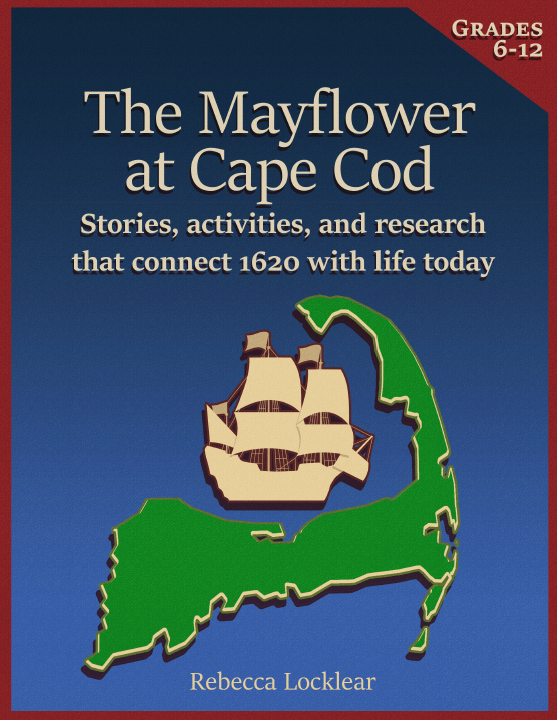
We received the ebook version of The Mayflower at Cape Cod. Though it was written for middle school and high school in mind (grades 6-12), I decided I would try to use it with all my children. After all, we have been used to doing the majority of our schooling together for years.


The Mayflower at Cape Cod is 74 pages long. It consists of seven lessons plus an introduction, several appendices, a list of the sources, an index, and acknowledgements. The introduction explains the specific time frame from history that the study focuses on, along with the purpose and goal of the study, plus an explanation of terminology, explanation for using the material, and an activity chart showing the different kinds of activities included for each lesson.


As you can see there are so many different activities to choose from, and in each lesson there is at least a page-worth of ideas listed for activities and research topics. If you wanted to use all the activity ideas, you could spend a lot of time on one lesson, or you could choose just a few depending on your children's interests.

Here's a list of the lessons:

  • Lesson 1: The First Encounter between Pilgrims and Native Indians
  • Lesson 2: Exploration Overview 
  • Lesson 3: The Mayflower Landing at Cape Cod
  • Lesson 4: Search Expeditions
  • Lesson 5: Native Indians
  • Lesson 6: After the First Encounter
  • Lesson 7: Present Awareness, Cross-Cultural Communication and Travel Tips, Native Indian Issues Today
Each lesson consists of objectives, background information, and the story broken into different headings. The first lesson also included a small section of people terms. There is then a list of activities which include the types in the chart above. And then there is a list of research topics. 

After the lessons you will find the four appendices:


  • Appendix A: Chronology of Events on Cape Cod 
  • Appendix B: Mayflower Statistics 
  • Appendix C: Answers
  • Appendix D: Seafood and Fowl Game Cards


O appreciate that the lesson stories aren't too lengthy, being about 2-4 pages long. However, there are some great details shared that are beyond what I had been taught. For example, I loved learning about the events of the first encounter between the Native Indians and Pilgrims. We had fun examining the First Encounter painting that is in the Plymouth Museum in Provincetown, MA. One of the activities was to find the errors by comparing the painting to the details we learned in the story. 


I think what struck me most about this, is how, if something as simple as the fact that there should have been six inches of snow on the ground can be shown incorrectly, what else about history has been changed without us realizing.

The children chose to try their hand at painting/drawing a more accurate depiction of the encounter.


There were several other activities we could have chosen from, but we chose the activity that was the easiest for the younger children.

And then of course there are the research topics. I chose to have only the two older girls worry about the research projects for now. For just the first lesson, there were eight different topics the student could choose from.

  • Combat (tactics of Native Indians attacking with bows and arrows)
  • Leiden (studying the time of the Separatists in Leiden)
  • Shallop (learning about this common small boat from the 1600')
  • Ships and Flowers (naming ships after flowers)
  • Space on the Mayflower
  • Wampanoag
  • Weapons (examining English and Native weapons)
  • Word "Pilgrim"
Tabitha chose to do some research on the shallop.


I appreciated that Lesson 2 did a bit of backtracking to help us understand the what influenced the events in the 1600's. I then had the children complete the "A Moment in Time" Art project.


When we start our summer school session after our short break, we will be continuing this study. I look forward to having the children learn more about the pilgrims' scouting expeditions and what they found, and discussing their thought process when it came to such things as stealing the Native Indians' food. And we will also be learning more about the Wampanoag, which really intrigues me. And then we will learn more about what happened after that "first" encounter.

I love that we can pick and choose what activities we will complete. It has made it that much easier to include the younger children. The older girls can read the story on their own, or listen in when I read to Harold and Hannah.

I really appreciate the way Rebecca Locklear delves into both sides of the story. I don't know about you, but when I was growing up I wasn't taught the Native Indians' side of the story. With everything going on in our world right now, I think it is very important to understand the whole story, to know the truth of our history. I really wish there was a way to know exactly what happened without the events being colored by each sides' prejudices and perspectives. But being able to see both sides does help to realize what we have been taught isn't the complete truth.

 You can sign up for Rebecca Locklear's email list and you will receive monthly updates with teaching tips and the latest news about her books, blog and student resources.

You can also find Rebecca Locklear on Facebook.


***

Wednesday, June 17, 2020

Homeschool Help with Online Lessons and Worksheets from Help Teaching {A Homeschool Review Crew Review}

Disclaimer: I received a FREE copy of this product through the HOMESCHOOL REVIEW CREW in exchange for my honest review. I was not required to write a positive review nor was I compensated in any other way.


Thanks to the Homeschool Review Crew, I had the chance to use HelpTeaching.com with Harold and Hannah. We were given  the HelpTeaching Pro Subscription, which allows us to use the site for a full year. HelpTeaching.com does offer free membership with access to custom tests and worksheets, but with the Pro Subscription we have access to so much more.


What is really neat about this site is you can choose to print out PDF's of the worksheets/tests, or you can assign them to your children to be done online, which is a huge deal for me because it helps to save on ink. Plus the site will grade the worksheets/tests for you. Of course, certain questions such as fill in the blank will need the parent/teacher to go in to grade those portions. So, in order to use this site, you will need to have internet access, and may need to have a printer plus ink to print tests and worksheets out. 

Join me for a tour of the site. 

When you first login to the site you will notice that there is a menu tab across the top of the page.


This first page shows the offerings under the Tests & Worksheets tab.


These worksheets, quizzes, and activities can be used online or printed out. There are many subject areas that you can choose from:
  • English Language Arts
  • Math
  • Science
  • Social Studies
  • K-6 Seasonal & Holiday
  • Vocational Education
  • Early Childhood
  • Art and Music
  • Study Skills Strategies
  • Graphic Organizer Worksheets
  • Physical Education (including fitness, nutrition, and sports)
  • Life Skills
As you can see from the screenshot above, each subject is highlighted in green and can be clicked on to go to that subjects main screen. Or you can click on the blue highlighted links to go to the different topics under the main subject. You could also choose to peruse all the worksheets available in a particular grade level.

For example, clicking on the "English Language Arts Worksheets" link will bring you to a page with links to different worksheets. The orange lock icon next to the link means that worksheet is only available if you have the Pro Subscription. For us, they are all unlocked.


There are similar links for all of the different subjects and topics. 

The next tab is the Lessons tab. This is where I spent a lot of my time during this review period.


There are online lessons in four different subject areas:
  • English Language Arts
  • Math
  • Science 
  • Social Studies. 
You can choose a topic directly from the main Lessons page, or you can browse the entire selection of lessons in the topic. This is what I usually do, searching for lessons under each of the children's grade levels.

The English Language Arts lessons have a slew of different lessons in different topic areas. 


There are eight different topics under the English Language Arts subject.
  • Grammar
  • Literature
  • Phonics
  • Pronunciation Skills
  • Reading Strategies
  • Spelling
  • Vocabulary
  • Writing
As you scroll down the page, each topic begins with lessons in the younger grades and works its way to the higher grade levels. On the right of the screen you will see what grade the lesson is designed for and how long the lesson should take. Plus there is a button that can be clicked to assign the lesson. I have actually learned it is better to click on the lesson and assign it from there because you will then be able to see related worksheets and lessons listed at the bottom of the page. However, a warning. I didn't realize this at first. These links are not shown to students. You, as the parent, have to go to these links and also assign them to your student(s). 

Here's a look at one of the lessons I assigned to Harold.


There is a short lesson at the top of the page plus practice questions, then there is a video for the student to watch.


The child does need to be able to read the sentences that are on the screen as most of the videos are set to music. At least the videos my children have watched so far.

At the bottom of the page you, as the parent, will find the links to the related worksheets and lessons.


Now, in order to assign the lessons or worksheets to your child, you will follow the link at the top of the page.


You can click "Share Link" to get the link to share; however, if you click the "Assign" tab, you have more options.


You could choose to give instructions to your child, though I usually leave it blank because they know to just read the lesson, do the practice questions, and watch the video. You can invite you students via email or share the link. And you can choose multiple students to assign the lesson to if you so choose. Thankfully the children have their own personal email accounts so they will receive the link and can just click on it to do their lesson and complete the worksheets (also called tests).

There are slightly different choices for assigning the worksheets.


Worksheets can be printed (as I mentioned at the beginning of the review), they can be taken immediately, or can be scheduled. You can also copy the test, but I haven't actually been able to figure out what that would benefit. I appreciate that they also provide an answer key. Though, like I mentioned, if a student takes the online version, the system will grade it for you.

If you would prefer to make your own tests, that option if available under the Test Maker tab.


You can create a test in all the different subjects, selecting questions from the site's huge library of questions or create your own. I actually haven't really used this section of the site, because it would be too time consuming for me. I appreciate that there are tons of worksheets and tests already available so I can assign them to my children quickly when I am busy.

The next tab is the Worksheet Generator tab. From here you can generate worksheets in math (addition, subtraction, multiplication, or division), or make different games and puzzles (Bingo Cards, Word Bingo Cards, or Word Searches).


The problems on the math worksheets are randomly generated, but you can choose the number of problems per worksheet and specify the number of digits. You can download the worksheet or choose to print it out. You can also use the same designations to print out multiple worksheets with different problems just by clicking the blue "New Problems" button.


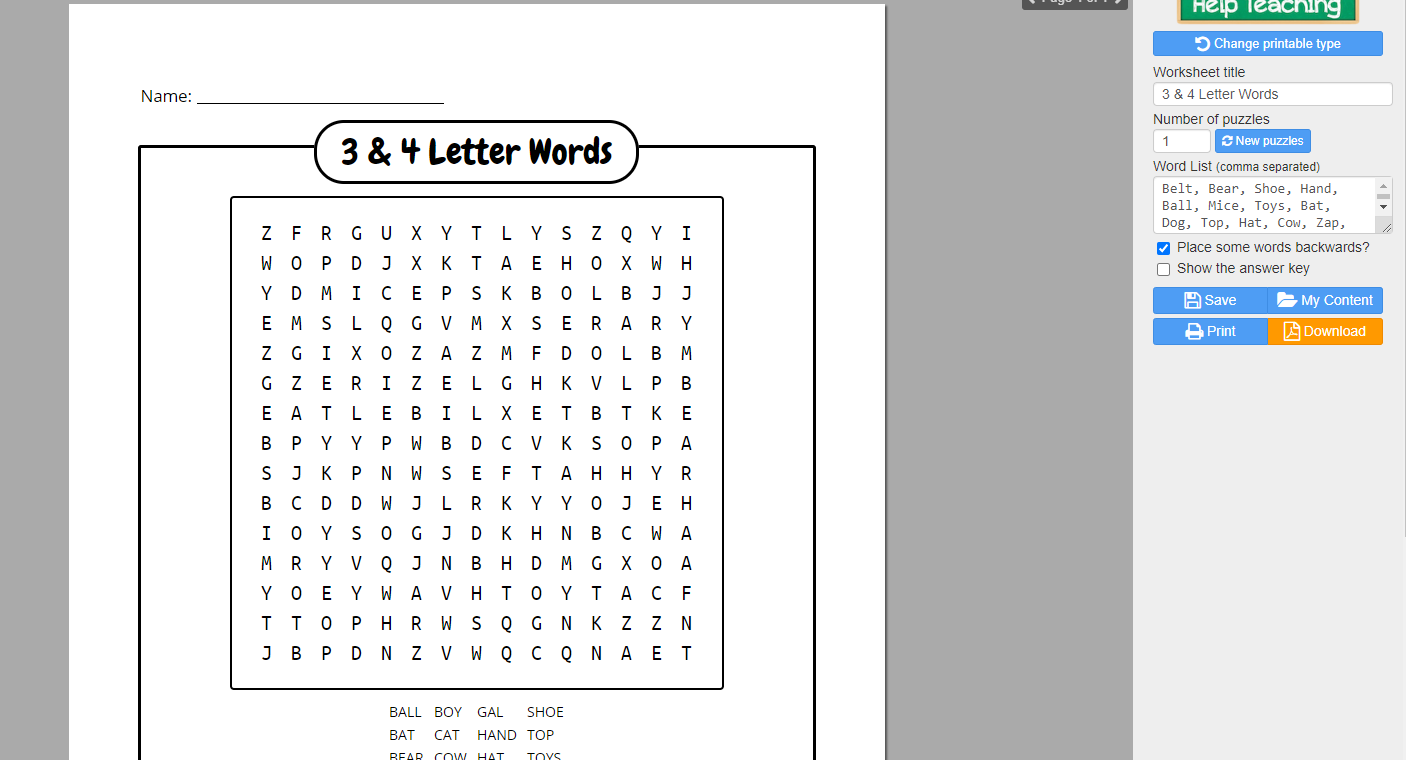
And here's a look at the Word Search generator:


It defaults to 3 & 4 Letter words and contains a list of words. However, you can change the title and add your own words. These would be great to use with spelling words or vocabulary words that your children may be working on in different subjects.

The Online Testing tab is where you will find a list of the worksheets and tests you have scheduled, plus be able to manage your students and check there results. It actually took me a while to figure out this was where I needed to come to check my children's work. I was searching around in the Tests & Worksheets page and the Lessons page, really confused as to where I was supposed to find my children's progress. When I did find the section after randomly clicking buttons, I couldn't find my way back, because I couldn't remember what exactly I had clicked to get there. I do wish the title of this tab, "Online Testing" had a different name to make it clear this was where you needed to come to see the children's progress. 


HelpTeaching.com is a wonderful resource for homeschool parents. I appreciate that there are lessons in addition to all the worksheets. And, even though I don't use the Test Maker section, I think it is wonderful for parents who can't find what they need in specific subjects. 

We have been using it mainly for Harold and Hannah to work on their grammar. However, I decided we would also start using it for math and social studies as well. Plus I think using the word search generator for spelling words or science vocabulary is going to be perfect. And of course, having a random math worksheet generator will give all the children lots of opportunities to improve their math skills.

Here's a look at the graded worksheet that Harold recently worked on for math review in 2nd grade. I wanted to see, here at the end of the school year, how he lined up with 2nd grade work.


You can find HelpTeaching.com on Facebook, Twitter, Instagram, Pinterest, and YouTube.
Plus they have a blog that is linked to in the menu bar at the top of the page.

Don't forget to click on the banner below to see what my fellow Crew Mates had to say about HelpTeaching.com.

***

Wednesday, June 10, 2020

Spelling and Math Practice with EdShed {A Homeschool Review Crew Review}

Disclaimer: I received a FREE copy of this product through the HOMESCHOOL REVIEW CREW in exchange for my honest review. I was not required to write a positive review nor was I compensated in any other way.


We were given the opportunity for the children to practice spelling and math with both Spelling Shed and Math Shed. During this review period, the younger two children have been the primary users of these programs, though Tabitha and Amelia are using it as well. 


We were given a one-year subscription to both Spelling Shed and Math Shed. The children have been able to access their accounts on the desktop computer and on their tablets.   


Each child has their own account login information. It was easy to set them up as my students, and they didn't have any issues logging in. One of the first things they wanted to do was change their avatar. There are basic changes, such as the facial features, hair, plain shirts, and plain backgrounds, that they can do at any time. 


Other changes need honey pots, which are earned while working and playing on the site. With these honey pots they can get fancier shirts, patterned backgrounds, and accessories. 


My children always enjoy playing around with their avatars, so this was quite the incentive to earn those honey pots. 

So, what exactly do children have to do to earn these pots? In other words, what do they do on the site?

Let's take a look at each section. When they first log in they will have the choice between Spelling Shed and Math Shed.


Let's begin with the children's favorite, Spelling Shed. 


There are different "stages" the children can choose from: Stage 1 & 2, Stage 3, Stage 4 & 5, or More Lists. 


When we first began, I had the younger children start in Stage 1 & 2, because I wasn't sure where to find information on what words were included in each stage. 

Once they click on a stage, they are given the choice between playing, creating a hive, and bonus games. 


In the normal play section, the children get to practice spelling with four different difficulties: Easy, Medium, Hard, and Extreme. 

In Easy mode, the child gets to see and hear the word and a definition before having to spell it.


They are then given all the letters for the word and have to unscramble them by clicking on them in order before the time runs out (there is a yellow bar across the top of the screen that flows from left to right as time counts down. They get approximately half a minute to spell the word, and they are able to backspace if they realize they misspelled it. They can also hear the word again if they need to and pause if they need to go to do something. 


Once they are done spelling the word, they click the green check mark at the bottom of the screen. They are given immediate feedback on whether they spelled the word correctly, or incorrectly.

I love that it shows the correct spelling and reminds the student what the meaning of the word is plus the part of speech, whether they get it correct or not. If they are right, they earn points.


If they are incorrect, they don't.


Once they complete all 10 words, they see their results.


If they choose the Medium difficulty, they play the same way, except they don't get to see the words first. However, in Difficult mode, they are given more scrambled letters than are required for the word. 


In the Extreme level, children have to click the letters from a honeycomb keyboard, plus they have approximately 10 seconds less to figure the word out.


Harold also enjoyed being able to play the different games. 


Bee Keeper reminds me of the old game Hang Man. Blank spaces are given and the child is to guess letters to figure out the word. For each letter they get wrong, they lose a bee. However, if they figure out a word, they get three of those bees back, plus earn a honey pot.


Missing Word gives the children a sentence and they have to fill in the missing word. There are again the four levels of difficulty. Easy allows the children to choose the correct spelling from between two words.


In the Medium level they need to pick between four words. But in the Difficult level they have to spell it the way they do in the regular play, by clicking  on the letters. And in Extreme level they have to use the full honeycomb keyboard again. 

These are some really fun ways for children to work on spelling. 

For the older girls, I had them pick a list from their grade lists under curriculum which could be found if they clicked on "More Lists."


From here they have the choice of the Spelling Shed lists, Dolch lists, Fry lists, or grade level lists. They have lists for 3-4 grade, 5-6 grade, and 7-8 grade. 

The children spent the majority of their time using Spelling Shed as we haven't been very consistent with spelling this year. But, I did have them use Math Shed as well. 


They could choose to work on Number Bonds, Times Tables, Powers of 10, Add & Subtract or choose from "More," which gave them the choice of Year 4 Mulitplication Tables Check or Negative Numbers. 

As we have been working on multiplication, Harold and Harold spent most of their time in the Times Tables section. They can choose from lots of different facts.


As with Spelling Shed they have different levels of difficulty they can choose from. Though there are only three instead of four. 

They are shown a problem and are to choose the answer from the different asteroids.


Easy level has them pick between three possible answers, where Medium level has them pick between six. In the Difficult level they have to type their answer in on the calculator.

I also appreciate that a I can go into my account as a parent and check their progress.

We have been enjoying practicing math and spelling with this fun site. I love that there are different stages of words in Spelling Shed, plus different levels of difficulty for each stage. However, I wish the words weren't given so randomly and that if they chose Easy from Stage 1 & 2, they could then more on to the next difficulty level with the same words, giving them a chance to practice with the same words. 

Either way, I do think this is a great and fun way for children to work on math and spelling skills. And I highly recommend it.

You can find EdShed on Facebook, Twitter, Instagram, and YouTube.

Don't forget to click on the banner below to see what my fellow Crew Mates had to say about Math Shed and Spelling Shed.

Spelling Shed & Math Shed {Education Shed Reviews}
Related Posts with Thumbnails