Showing posts with label History. Show all posts

Friday, November 6, 2020

Digging Into Archaeology with Drive Thru History® Adventures {A Homeschool Review Crew Review}

Disclaimer: I received a FREE copy of this product through the HOMESCHOOL REVIEW CREW in exchange for my honest review. I was not required to write a positive review nor was I compensated in any other way.


We had the pleasure of being able to review Bible Unearthed thanks to the Homeschool Review Crew. This is a course from Drive Thru History® Adventures that is helping us to really dig into archaeology and the importance of how it helps us to understand the ancient world, especially things from the Bible.


We were granted lifetime access to this 12-part digital series.  


The course is geared toward children in upper elementary grades and older. This means the older girls were the children who I felt would get the most out of it. However, one of the reasons I really wanted to review this course is because I am quite interested in ancient history (I have been since I took a course in college), and I love the thought of checking out the accuracy of the Bible. Another reason I was so interested in this course is because we have watched other Drive Thru History® videos in the past, and have really enjoyed them. 

This course features Dave Stotts, who is the host of Drive Thru History®. We loved following on his journeys around the Bible lands. Joining him are Dr. Titus Kennedy, an archaeologist, and Randall Niles who works with Mr. Stotts as a writer of the series. They gather together in their secret lair to teach us through the discussions they are having. They alternate between asking and answering questions, sharing information on a chalkboard, showing off artifacts, sharing slides, and watching videos of Dr. Kennedy in the field. 

As they mention in the first episode, when we are watching the Drive Thru History series, we are getting the archaeology second hand. So, they wanted to have a chance to really get into the archaeology itself. 

When I first logged into the course, I was able to check out the welcome information and the course guide, which helped me decide how we were going to make our way through the course.

Here is a list of the twelve episodes we are working through:
  1. What is Archaeology?
  2. The Impact of Archaeology
  3. Locating Archaeological Sites
  4. The Life of an Archaeologist
  5. What's Being Discovered Today?
  6. Archaeological Mysteries
  7. Top Discoveries in Bible Archaeology
  8. Getting Involved with Archaeology
  9. Trends in Archaeology
  10. Weird Archaeology
  11. Accidental Discoveries in Archaeology
  12. What's Left to be Discovered?
As was to be expected, they started out by defining what archaeology is. Dr. Kennedy is the teacher in the course, the one with the PhD. So, he is quite serious while giving the lessons. And he goes into details using more technical ideas at times. Such as going into the fact that the word archaeology comes from two Greek words which mean "Study of the Ancient." He then goes on to give a long definition, which Mr. Stotts asks to be given in easier to understand terminology. The definition is ultimately boiled down to, "Digging up old stuff." We had to chuckle at that. Where Dr. Kennedy is the serious teacher, Mr. Niles acts as if he is the attentive student eager to learn, and Dave Stotts is the mischievous one.

We are given a brief look at the history of archaeology. They discuss how it started as people who were treasure hunting or even grave robbing. However, during the Renaissance period, there became a real interest in learning about the past. And the discipline we know as archaeology today was birthed out of these "antiquarians."

They go on to discuss some early archaeological excavation sites, such as Pompeii (which we have learned about in our core curriculum) and Troy (which is the topic of the book that captured Dr. Kennedy's attention when he was younger). 

Dr. Kennedy shows us many artifacts. Here he is discussing the Rosetta Stone (of course, this is just a small replica):


This was fun to watch, because we had studied Ancient Egypt a few years ago, and learned about it, and the importance it had in helping us to understand Egyptian hieroglyphs. 

Looking through the slides of some different archaeological sites was quite interesting as well. Some of the places we had learned about, such as Pompeii, Troy, and the Great Pyramids, but we also learned about some new places, such as the Minoan Palace of Knossos in Crete. 

Here's the slide he showed us of Pompeii:


As we have been making our way through the course, it has been impressed upon us that archaeology is so important because it helps us to better understand the historical context of the Bible, and to understand the historical narratives. We can see the reliability of the Bible, which was thought to just be mythology or propaganda. And when archaeologists have gone in, hoping to DISprove the Bible, they have actually found evidence of it being true. 

It goes on to explain that archaeology helps to fill in the gaps and illuminate passages. We get to see important inscriptions that prove the people, such as King David, actually existed, and events in the Bible actually happened, such as the wandering of the Israelites around 1400 BC. 


They also show and explain different maps of excavation sites.


It was definitely quite interesting learning about the specifics that they have to record while out on the field.


I really enjoyed the clips of Dr. Kennedy out on the field. I think that is because it reminds me more of the Drive Thru History® videos we are used to, with Dave Stotts wandering around in different areas to teach us about them. I admit, this Bible Unearthed course is a bit different than we were expecting, knowing how the other Drive Thru History® series have been. Don't get me wrong, that doesn't mean we don't like this course. It was just. . . different. I do think the children don't have as much interest in it as I do. However, we will continue to make our way through it.

I've really enjoyed learning about the different artifacts found, artifacts that help us prove that the Israelites were in the land of Canaan, and that King David actually existed as an important historical figure. I was intrigued by the finding of royal seals and steles. Proof that the events in the book of Daniel actually happened. I found it interesting that they are still looking for the exact location of Emmaus, mentioned in the New Testament. There is just so much out there that is being discovered, and is helping to confirm, instead of disprove, the Bible. 

We aren't just getting to watch these amazing videos though. With the Drive Thru History® Adventures, we get additional resources, such as Dig Deeper articles, and worksheets which include summary information and other details (some not included in the videos), plus questions for the children to answer, Bible passages to read, and optional activities, such as mapping an archaeological site, making a time line, and using geography to locate an ancient site.  


I have been watching the videos with the younger children, but it is the older girls who have been working on the worksheets. I have them watch a video each week, and then they are to read the worksheet information and answer the discussion questions. They have mentioned that they have trouble finding the answers at times, and they haven't really been interested in the Digging Deeper articles, but I have found them quite intriguing. 

Amelia has stated that she loves they watching the videos has given her an idea on a story to write. Plus, she said, "we have actual evidence to prove people wrong" when it comes to the events in the Bible.

As we go through the course, I am looking forward to learning about the accidental discoveries and what is left to be discovered. 

This really is a great course, and one I highly recommend. However, if you are used to the other Drive Thru History® series, just be aware that they aren't quite the same. 

If you haven't viewed any of the Drive Thru History® series, I invite you to read my review of Drive Thru History® - The Gospels.

You can find Drive Thru History® Adventures on Facebook, Instagram, and YouTube.

Don't forget to click on the banner below to see what my fellow Crew Mates had to say about Bible Unearthed. 


Friday, June 19, 2020

Delving into the Story of The Mayflower at Cape Cod with an Ebook from Rebecca Locklear { A Homeschool Review Crew Review}

Disclaimer: I received a FREE copy of this product through the HOMESCHOOL REVIEW CREW in exchange for my honest review. I was not required to write a positive review nor was I compensated in any other way.

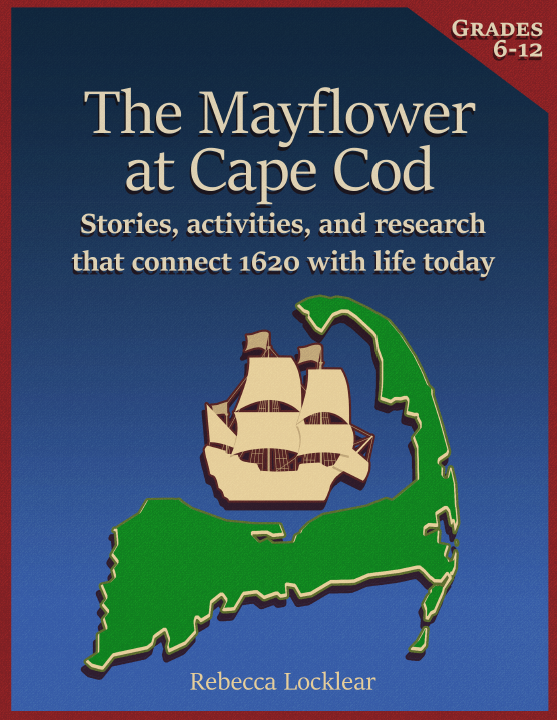
The children and I haven't been very consistent with our history lessons these last few months. So, when an opportunity arose to review The Mayflower at Cape Cod - Stories, activities, and research that connect 1620 with life today from Rebecca Locklear, I thought it would be fun to look at a well-known historical event from a different perspective. Though we had been learning about colonial times earlier this year, I figured a little review wouldn't hurt. What made it even more exciting was realizing 2020 is the 400th anniversary of the Mayflower's voyage and the events we were going to delve into.


We received the ebook version of The Mayflower at Cape Cod. Though it was written for middle school and high school in mind (grades 6-12), I decided I would try to use it with all my children. After all, we have been used to doing the majority of our schooling together for years.


The Mayflower at Cape Cod is 74 pages long. It consists of seven lessons plus an introduction, several appendices, a list of the sources, an index, and acknowledgements. The introduction explains the specific time frame from history that the study focuses on, along with the purpose and goal of the study, plus an explanation of terminology, explanation for using the material, and an activity chart showing the different kinds of activities included for each lesson.


As you can see there are so many different activities to choose from, and in each lesson there is at least a page-worth of ideas listed for activities and research topics. If you wanted to use all the activity ideas, you could spend a lot of time on one lesson, or you could choose just a few depending on your children's interests.

Here's a list of the lessons:

  • Lesson 1: The First Encounter between Pilgrims and Native Indians
  • Lesson 2: Exploration Overview 
  • Lesson 3: The Mayflower Landing at Cape Cod
  • Lesson 4: Search Expeditions
  • Lesson 5: Native Indians
  • Lesson 6: After the First Encounter
  • Lesson 7: Present Awareness, Cross-Cultural Communication and Travel Tips, Native Indian Issues Today
Each lesson consists of objectives, background information, and the story broken into different headings. The first lesson also included a small section of people terms. There is then a list of activities which include the types in the chart above. And then there is a list of research topics. 

After the lessons you will find the four appendices:


  • Appendix A: Chronology of Events on Cape Cod 
  • Appendix B: Mayflower Statistics 
  • Appendix C: Answers
  • Appendix D: Seafood and Fowl Game Cards


O appreciate that the lesson stories aren't too lengthy, being about 2-4 pages long. However, there are some great details shared that are beyond what I had been taught. For example, I loved learning about the events of the first encounter between the Native Indians and Pilgrims. We had fun examining the First Encounter painting that is in the Plymouth Museum in Provincetown, MA. One of the activities was to find the errors by comparing the painting to the details we learned in the story. 


I think what struck me most about this, is how, if something as simple as the fact that there should have been six inches of snow on the ground can be shown incorrectly, what else about history has been changed without us realizing.

The children chose to try their hand at painting/drawing a more accurate depiction of the encounter.


There were several other activities we could have chosen from, but we chose the activity that was the easiest for the younger children.

And then of course there are the research topics. I chose to have only the two older girls worry about the research projects for now. For just the first lesson, there were eight different topics the student could choose from.

  • Combat (tactics of Native Indians attacking with bows and arrows)
  • Leiden (studying the time of the Separatists in Leiden)
  • Shallop (learning about this common small boat from the 1600')
  • Ships and Flowers (naming ships after flowers)
  • Space on the Mayflower
  • Wampanoag
  • Weapons (examining English and Native weapons)
  • Word "Pilgrim"
Tabitha chose to do some research on the shallop.


I appreciated that Lesson 2 did a bit of backtracking to help us understand the what influenced the events in the 1600's. I then had the children complete the "A Moment in Time" Art project.


When we start our summer school session after our short break, we will be continuing this study. I look forward to having the children learn more about the pilgrims' scouting expeditions and what they found, and discussing their thought process when it came to such things as stealing the Native Indians' food. And we will also be learning more about the Wampanoag, which really intrigues me. And then we will learn more about what happened after that "first" encounter.

I love that we can pick and choose what activities we will complete. It has made it that much easier to include the younger children. The older girls can read the story on their own, or listen in when I read to Harold and Hannah.

I really appreciate the way Rebecca Locklear delves into both sides of the story. I don't know about you, but when I was growing up I wasn't taught the Native Indians' side of the story. With everything going on in our world right now, I think it is very important to understand the whole story, to know the truth of our history. I really wish there was a way to know exactly what happened without the events being colored by each sides' prejudices and perspectives. But being able to see both sides does help to realize what we have been taught isn't the complete truth.

 You can sign up for Rebecca Locklear's email list and you will receive monthly updates with teaching tips and the latest news about her books, blog and student resources.

You can also find Rebecca Locklear on Facebook.


***

Wednesday, April 29, 2020

Digging into The Hidden Message of the Great Seal {A Homeschool Review Crew Review}

Disclaimer: I received a FREE copy of this product through the HOMESCHOOL REVIEW CREW in exchange for my honest review. I was not required to write a positive review nor was I compensated in any other way.


I was thrilled when I was given the chance to read a historical research book titled, The Hidden Message of the Great Seal  by Michael Kanis. This book from The Hidden Message, LLC came at the perfect time because we have been learning about early American history. 


This 256-page softcover book really intrigued me. I'd heard different accusations regarding important people in our country's history adding certain parts to the seal because of freemasonry or some sort of new world order. Don't get me wrong, it's not that I believed such conspiracy theories, but when I learned of this book, I was truly interested in what the true story behind the Great Seal was. Though I admit, I was a little hesitant, thinking, wait, what if this book ends up being misleading. Thankfully, I have discovered that that concern was unfounded. 

There are a total of 24 chapters, including an introduction and a conclusion, plus a section for endnotes. Here is a list of the chapter titles: 
  1. Introduction
  2. Time Capsule
  3. The Significance of the Seal
  4. Setting the Stage
  5. A Tale of Two Systems
  6. Studying the Seal 
  7. How Could It Have Been Hidden So Long?
  8. Charles Thomson
  9. Francis Hopkinson
  10. The Pyramid
  11. Annuit Coeptis
  12. Novus Ordo Secorlum 
  13. The Eye
  14. The Early Designs Part I
  15. Early Designs Part II
  16. The Covenant
  17. The Front of the Seal
  18. The Four Pillars
  19. Virtue
  20. Freedom
  21. Providence
  22. Unity
  23. Unexpected Connections
  24. Conclusion
The first nine chapters of the book set the stage for the rest of the book, explaining the importance of the seal. It discusses important seals from the past, and includes images.


It explains how our founding fathers would have put a lot of import in the making of the seal and the seal itself. I love that the book explains how the founding fathers, specifically George Washington put a lot of importance on believe and trust in God. and there are lots of his quotes. We see the importance of holding fast to the form of government our founding fathers gave us, a system that has worked for years.

The chapters that focus on Charles Thomson and Francis Hopkinson seemed a bit out of place to me at first, but then I realized the author was sharing their background to express their credibility in their part in creating the seal.

The author then focuses on the reverse of the seal, starting with the pyramid. I found so much intriguing information in this chapter. This is the part from the front of the seal that the author spends the most time on. As he does with the Eye, Mr. Kanis starts out by dealing with the misconceptions and debunking them. I appreciated that he showed the common thoughts on the meaning of the 13 steps, but digs further into the meaning, looking back through history and showing the connection with the Solidus from Byzantine empire.


I was quite intrigued.


The book goes into such detail, making sure to show how thoroughly the designers thought through the images, the format, and the words that went onto the seal. 

The common thought behind the 13 step pyramid is that they represented the original 13 states, and it was unfinished, because the country could still grow. But the author shows that their is dual symbolism. Mr. Kanis is very thorough in showing how much Godly principles and virtues would have played a part in what the designers wanted from not just the seal, but for our country. As we have just recently been learning about Benjamin Franklin, I was quite interested to learn that the 13 rows also symbolize Franklin's 13 Virtues.


The author then expresses how important it is for our country to get back to the founding fathers' beliefs on the importance of virtue, showing how without it, our country will eventually fall into tyranny. And as I was reading the book, I could see the truth in what he was saying. He even shared a chart which depicts the stages of government as written about by Plato in The Republic thousands of years ago. Honestly, it is scary to see where our country could be heading as it falls further away from the ideals our founding fathers held so dear, and made sure were in place in such things as the Great Seal, the Declaration of Independence, and the Constitution.

The next three chapters focus on the final parts of the reverse of the seal. Then the author looks at the Early Designs.


And shows that even though the changes, there was a consistent message and common elements.


I noticed that the information about the front of the seal didn't take up near as much room in the book. In fact, the Front of the Seal is just one chapter that incorporates each symbol and it's extended metaphor. 

The book concludes with chapters that talk about the major themes found in the seal: virtue, freedom, providence, and unity. 

As I mentioned above, this book is quite intriguing. I appreciate the detail that the author put into the book and the research that he did. It is so important to understand what the founding father and the designers of the Seal really had in mind when they designed it. This book sure is enhancing my understanding our the beliefs of our founding fathers and my understanding of American History.

I have not yet shared the book with the children. There is a lot of information here that I feel can't quite be grasped by them at this time. When I find some information that intrigues me, I do like to share, sometimes with them or with my husband. I am still working my way through the book and am really enjoying. But I read non-fiction books quite slowly and find myself needing to reread portions multiple times to get things to "click." I am sure as I continue to read the information in the book, I will be just as intrigued as I have been so far.

The one concern I had with the book is that it is a softcover book and is heavy and bulky and very hard to hold while reading. This in no way negates the message of the book, but I did want to bring it up. I found the easiest way for me to read the book is to be lying down and be able to balance the book on the bed or couch beside me.


I don't know if would have been easier to handle if is was a hardcover book or not. Because that would have made it heavier, but then the one side of the book wouldn't be flopping so much.

It is definitely a great book for adults and older middle school/high school students, for understanding our great country of the United States of America, and definitely a book I fell should be in every homeschool family's library.

In fact, you can get the book for 50% off until May 30th, 2020 by using the discount code that was generously offered. This can be used if you purchase the book from The Hidden Message website. Just enter the coupon code: HOMESCHOOL at checkout.


Don't forget to click on the banner below to read what my fellow Crew Mates had to say about The Hidden Message of the Great Seal. 

The Hidden Message of the Great Seal {The Hidden Message, LLC Reviews}

Friday, March 27, 2020

Learning About History with a Fun, Hands-On Lapbook from Home School in the Woods {A Homeschool Review Crew Review}

Disclaimer: I received a FREE copy of this product through the HOMESCHOOL REVIEW CREW in exchange for my honest review. I was not required to write a positive review nor was I compensated in any other way.


We again had the opportunity to supplement our history lessons with a great resource from Home School in the Woods. We have been learning about colonial times in America, working out way up to the American Revolution, so when we had the chance to use the Benjamin Franklin K-2 Lap-Pak, I was quite excited. It sounded like a fun way to learn more about one of our founding fathers.


I'm always amazed at the perfect timing of these reviews for Home School in the Woods resources. When we were learning about Ancient Egypt, we were able to review the Ancient Egypt Timeline and the Tomb Dash File Folder game.  And then, several months later, when we were focused on Ancient Greece, we had a chance to put together the Ancient Greece Timeline. A year later, we were given the opportunity to review people and events that we had learned about, plus learned new information from the same time periods, with the Timeline Collection. Home School in the Woods has such awesome products, and I was so thrilled that we were able to try something a bit different this time, one of their Lap-Paks, which we used to make an awesome lapbook all about Benjamin Franklin.


What did we receive?

We received a digital download of this Lap-Pak. Once I downloaded it to my computer, I just needed to open the files and get started. There is an Images file, an MP3 file, and a collection of PDF files. Of course, in order to use the Lap-Pak, I needed to print out the files, so a printer and printer ink is needed. I am so glad that everything is able to be printed out with black ink. In order to add color, some of the files get printed out on colored paper or card stock. And of course, there are plenty of pictures that the children can color. In addition to normal school supplies, you may also want to purchase a 6"x9" manila envelope, double-sided sticky tape, Velcro, and ribbon. We actually got by by using glue in place of the sticky tape, yarn in place of the ribbon, and chose to print out the binder-sized story instead of the booklet, so we didn't need the manila envelope. A gallon-sized zippy bag is great for storing the different projects in until they are all complete and the lapbook is ready to be assembled. The one thing you won't be able to get by without is the file folder, if you plan to make an actual lapbook project.

The main portion of the download is the collection of PDF files. These are broken into three sections: Introduction, Lapbook Projects, and Reading Text.

In the Introduction you will find:

  • Booklet Directions (for putting together the Ben Franklin story in booklet form)
  • Ben Franklin Introduction and Directions
  • Ben Franklin Lapbook Assembly
  • Ben Franklin Project Directions
You could choose to print out the directions, though I prefer to keep the directions up on the computer screen to save ink. 

The Lapbook Projects file contains the bulk of the Lap-Pak. There are 12 projects:
  • The Franklin Family
  • Leather Apron Trades
  • Ben Franklin, the Printer
  • Printer's Type 
  • Ben, the Good Citizen
  • Poor Richard's Almanack
  • Franklin's Inventions
  • Benjamin Flies a Kite
  • Documents
  • Vocabulary 
  • Pocket of Virtues
  • A Timeline of Ben Franklin's Life
Also included in the Projects file is the Lapbook cover, which is a picture of Benjamin Franklin.

The Reading Text file contains the Benjamin Franklin story is three formats, allowing you to print it in the way that works best for you. 
  • Individual files of each page so you can print them off one at a time
  • Full booklet text file for those with the ability to print duplex
  • Full-size text file for printing on normal sized paper and placing in a folder or binder
I chose to print it out on normal sized paper, because knowing me, I would have messed up the booklet printing, printing pages upside down or something and would have had to start again. Yes, been there done that. 

So, how did we use the Ben Franklin Lap-Pak?

I chose to use this resource with both Hannah and Harold, even though it states it is for children in K-2nd grade. Personally, I think it is very much appropriate for children up to 4th grade. Children in the lower end of the grade range will still need a parent to read most, if not all, of the text. Older children, like Harold and Hannah, are able to read the information for themselves. All children in this age range should be able to work on the projects independently, as long as they can cut, glue, and color. 

I started out by printing the story pages and the first project, The Franklin Family. The children colored the family picture while I read, and then we worked on filling in the blanks on the informational sheet.


The remainder of the projects were given to the children to work on independently throughout the review period.


I would usually print out one or two projects at a time and explain what needed to be done. They colored, cut, and/or glued to finish the individual projects, then we stored them in a zippy bag to keep everything together.


There was a lot of information for the children to read, and sometimes we read it together. There were some projects where I had a choice whether to have them write the information themselves or print out the pre-printed information. Families with younger children could definitely benefit from being able to use the pre-printed pages, but at 8 and 10 years old, I figured Harold and Hannah were definitely capable of writing the information themselves. As an added benefit, they got to work on their penmanship. Plus, the process of physically writing does help get that information into the brain. 

They were able to write the vocabulary words and are working on writing some of Benjamin Franklin's saying in the Poor Richard's Almanack booklet.


There was so much information to learn, both about Benjamin Franklin and colonial times. 

We learned about different trades:


We learned about Benjamin Franklin's job as a printer and a bit about how printing worked.


We learned about his inventions and his work in the community.


And of course, who hasn't heard of Ben's experiment with the key, the kite, and lightning?


We put together a Pocket of Virtues. There was a short explanation of each virtue and the children had to write the virtue and draw a picture to represent each one.


And, of course, Ben Franklin played important rolls in political endeavors, leading to the drafting of important documents in the founding of our country.


Then they read through the Timeline of Ben Franklin's Life and added in the pictures for certain events.


Once all the projects were complete, it was time to assemble the lapbook:


Hannah says the lapbook was fun and a fun way for people to learn about Benjamin Franklin. She loved that there were pop-ups (Benjamin Flies a Kite and Ben Franklin, the Printer).

I really appreciated this lapbook and how much information about Benjamin Franklin is provided. There is so much I didn't know, and I was learning right alongside the children. The instructions were clear and easy to follow. I love that written directions were provided as well as pictures of the projects and completed parts of the lapbook, showing us exactly how to put it together. 

If you are learning about colonial America or the time of the American Revolution, this would be a great supplement to enhance your child's knowledge of an important figure in our country's history. Of course, I've always been a fan of hands-on learning, and this lapbook didn't disappoint.

You can find Home School in the Woods on Facebook, Twitter, Instagram, and Pinterest.

They even have a blog! As we are focusing on American History, maybe you would be interested in reading about Using Time Travelers to Teach American History. Not exactly sure what a "Time Traveler" is? You could check out their What is a Time Traveler post. There are seven different Time Travelers available for American history. Starting with New World Explorers and extending through World War II.

Being an election year, you may even want to check out the U.S. Elections Lap-Pak.

These Time Travelers are some of the products we could have chosen to review, as are Project Passport studies and other Lap-Paks and Activity Paks. You can read reviews for all of these different products by clicking on the link below.

Home School in the Woods Collections - Lap-pak, Timeline Figures, History Studies & Activity-Pak {Home School in the Woods Reviews}
Related Posts with Thumbnails